The Game Plan: Why Business Is a Team Sport
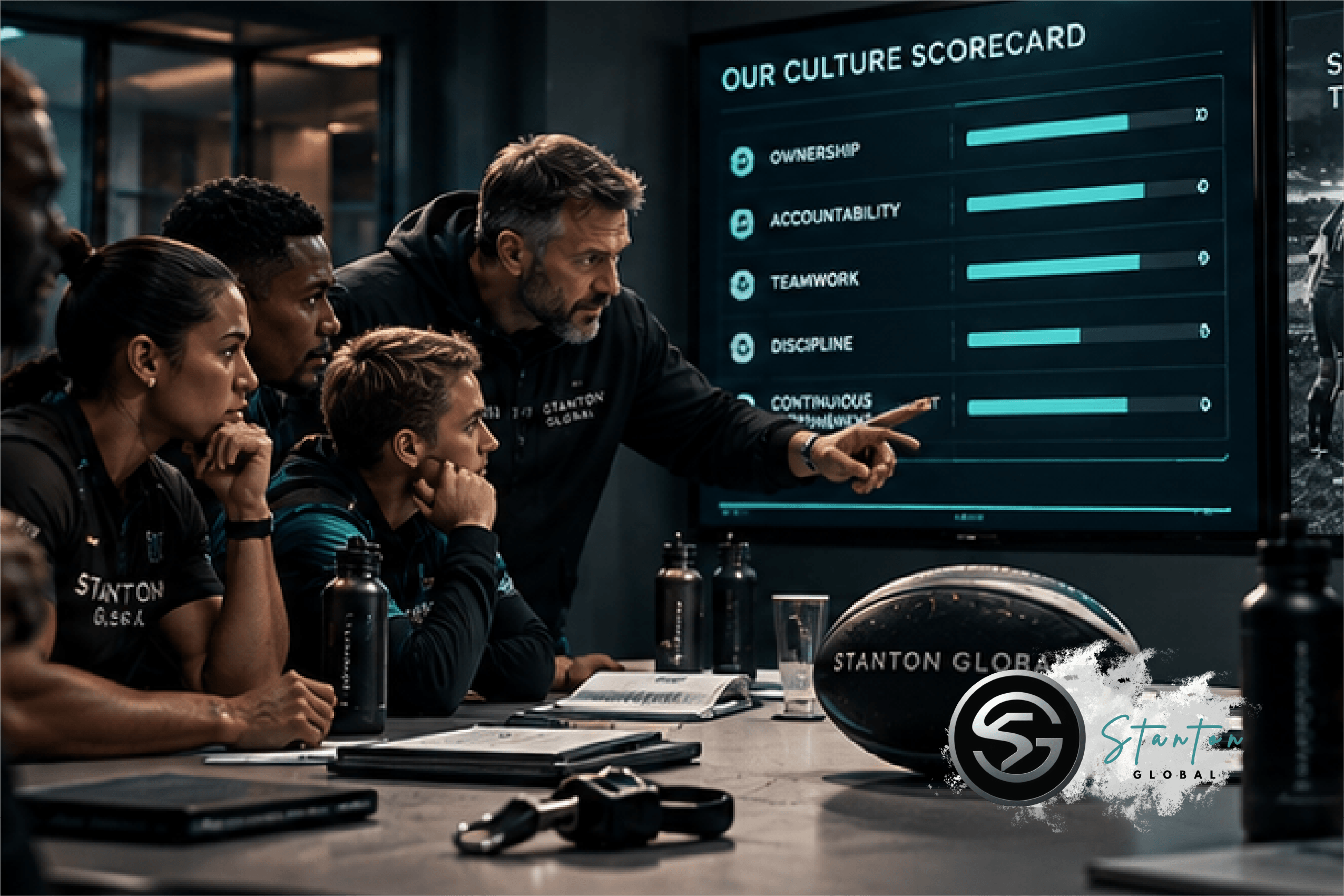
You can have talented players, a passionate captain and a very impressive jersey. But if everyone runs their own game plan, you’re in for a long afternoon. Business is much the same.
I wrote The Game Plan to help our team at Stanton Global understand the game we’re playing, how we approach it and how each person contributes. A team needs to see where it’s going and understand how to get there together.
Why rugby?
Rugby makes teamwork impossible to ignore. The front row and the wings bring different strengths and have different jobs, but they’re working towards the same result. The winger might score the try, but that opportunity started long before the ball reached their hands. Someone won possession. Someone created space. Someone made the pass at the right moment.
The same applies in business. A successful outcome is usually the result of several contributions, including work that happens quietly in the background. Understanding that connection helps us appreciate each other’s roles and take our own seriously. And, just like rugby, business rarely gives you a perfectly predictable match. You need a shared direction and a team capable of thinking on its feet.
Know the game, not just your position
Knowing your responsibilities matters. Understanding how your work affects the next person matters just as much. On the field, a player who never looks up will miss opportunities, however skilled they are with the ball. At work, we can become so focused on our own tasks that we lose sight of what the team needs.
A useful question is: “What does the next person need from me to do their job well?”. Sometimes it’s clear information. Sometimes it’s a timely decision or an early warning that something has changed. Those small actions help the whole team move forward.
Stay coachable, especially when you’re good
Even the best players train. They review matches, listen to feedback and practise the basics. Experience gives us valuable judgement. Staying coachable allows us to keep improving that judgement. That means asking questions, being willing to try a better approach and listening to feedback without immediately preparing our defence. It also means having the confidence to say, “I need help with this.” As leaders, we have to bring the same attitude. Coaching requires clear expectations, useful feedback and the patience to help someone improve. We must also be willing to listen and learn ourselves.
Own the next phase
Things will go wrong. A deadline slips, a decision misses the mark or an unexpected problem lands in the middle of a busy day. In rugby, standing still and arguing about the last phase leaves your team a player short for the next one.
Ownership starts with acknowledging what happened and asking: “What can I do now to help put this right?”. There’s still a place to review the mistake and learn from it. But first, we need to respond, support each other and get moving again. A team grows stronger when it can be honest about mistakes and take responsibility for fixing them.
A game plan comes alive through the team
A book can set out an approach. Its value comes from what we do with it. For me, The Game Plan is a starting point for shared understanding, better conversations and continuous learning. It should help us make decisions, contribute with confidence and recognise when a teammate needs support. The ambition is simple: a team that understands the game, takes pride in its contribution and keeps getting better together.
And that’s a team worth turning up for.